Concept · LK-01 · Night window 04:00–06:00
Glass-free bike lanes before the first commute.
Lanekeeper is a robot sized to fit inside a protected bike lane. It finds broken glass with Google DeepMind’s Gemini Robotics-ER, sweeps it, and logs every cleared spot on a map your city and its riders can see.
- Footprint
- 1300 × 800 × 550 mm
- Sweep path
- 900 mm
- Cost per lane-mile
- ~$18 vs ~$44 staffed*
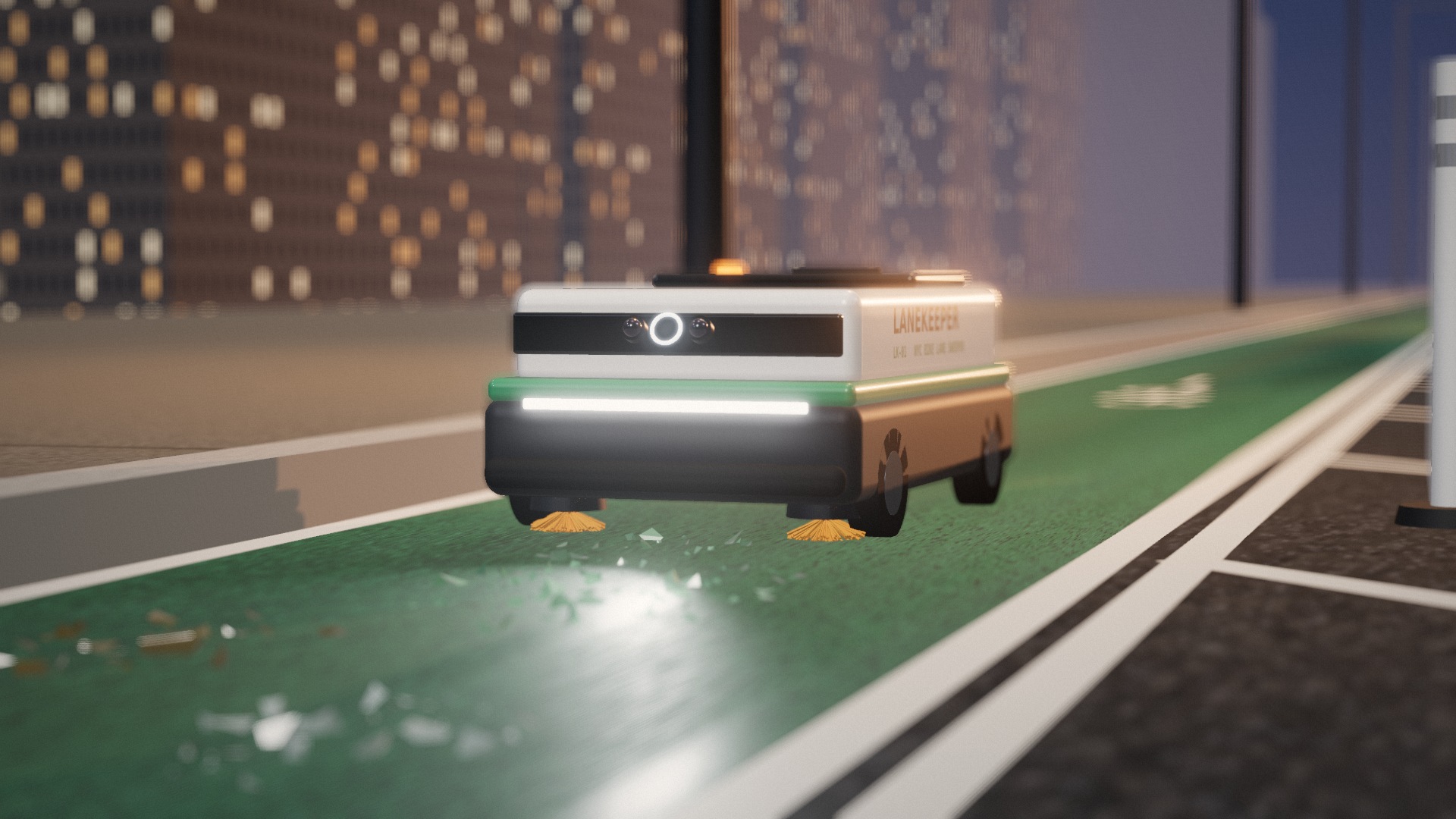 Drag to turn
The robot
Small enough for the lane. Low enough to pass.
At 800 mm wide, LK-01 leaves 580 mm of a 1.5 m lane open for an early rider. Turn it, pull it apart, or tap a number to see what each part does.
Concept model built to the LK-01 design targets. Dimension drawings · Spec sheet


How it works
From a flash of glass to a cleared spot on the map.
- 01
Detect on board
A cross-polarized strobe makes glass flash. A small detector on the robot drops the brooms in under 50 ms.
- 02
Verify with Gemini
Google DeepMind’s Gemini Robotics-ER 2 confirms each flagged frame, points at every cluster and counts the pieces.
- 03
Plan the pass
The robot shifts its line, slows and widens its brooms over the cluster, then yields to any rider.
- 04
Prove it’s clear
A rear camera re-checks the spot. A second pass runs if anything is left.
- 05
Log the cleanup
The time, lane cell and shard count go to the map and the morning’s public run report.
Your city
See what Lanekeeper would cover on your protected lanes.
Each map shows the existing protected bike lanes from the city’s own open data. Pick a city to size a fleet and compare its cost with staffed sweeping.
The map needs WebGL. The lane-mile figures and the estimate still work.
- Robots needed
- –
- Lane-miles swept per night
- –
- Yearly cost, Lanekeeper
- –
- Yearly cost, staffed mini-sweepers
- –
- Estimated difference
- –
Estimates only. Both fleets are sized to sweep the full protected network the chosen number of times a week. Costs come from the Lanekeeper cost model: DSNY’s 2022 mini-sweeper capital cost, an operator at a loaded city wage, and a robot build cost that is our estimate. Assumptions
Riders
Riders point the robots to the glass.
Planned for pilots: a rider snaps a photo and texts it to GLASS (45277) or sends it on WhatsApp. Gemini checks the photo, the spot joins the next night’s queue, and the rider gets a reply. Not live yet.
Public run reports
Every run ends with a report anyone can scan.
After each night’s sweep, a report shows when the robot ran, how many glass spots it cleared and where. See the full presentation or a sample run report.
Request a demo
Bring Lanekeeper to your lanes.
For transportation, sanitation and street-operations teams. We’ll walk through the robot, map your protected network and plan a pilot corridor with you.
- A 30-minute walkthrough of the robot and the data platform
- A coverage and cost estimate for your protected lanes
- A pilot plan: corridor, schedule and success measures
Assumptions
| Input | Staffed mini-sweeper | Lanekeeper robot (base) |
|---|---|---|
| Machine cost | $148,889 (DSNY: $6.7M for 45 units, 2022) | $60,000, our estimate |
| Service life | 7 years | 5 years |
| People | One operator per unit, $130k loaded | One remote supervisor per 10 robots |
| Work per year | 250 shifts × 15 lane-miles | 330 nights × 10 km in the 4–6 a.m. window |
| Per lane-mile | $44.34 | $18.28 |
* Base case. Low and high scenarios range from $11–$45 per lane-mile for the robot and $29–$79 for staffed sweepers. Lane-miles are centreline miles of existing protected lanes in each city’s open data, so two-way lanes count once.